
Deacon Spotlight: Ty Kraniak
Ty Kraniak (2015, BA in Anthropology and Spanish)
Strategy Manager at Woven Health Collective in Atlanta, GA
Tell us about your current job role and employer. What are you currently working on?
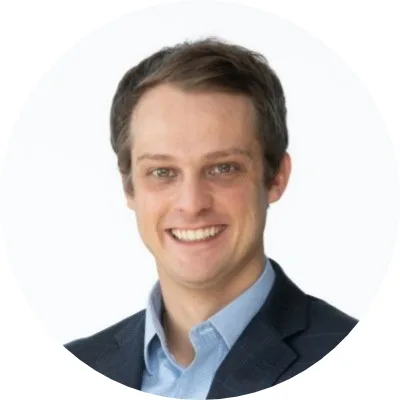
I am a Manager and AI Team Lead at Woven Health Collective, a healthcare strategy and transformation firm based in Atlanta. I work with healthcare organizations, life sciences companies, digital health companies, and venture investors to tackle complex strategic and growth challenges. My work spans everything from developing new market and partnership strategies to helping organizations adopt AI and transform how they operate.
Currently, I am leading several projects focused on healthcare commercialization, strategic partnerships, and AI-enabled transformation. For example, I am helping a medical affairs organization develop an AI transformation roadmap to improve its operations, and I recently led a team developing a go-to-market and partnership strategy for a Fortune 100 pharmaceutical company entering the GLP-1 market. I also lead AI strategy for a 25-person business unit at Woven and work with venture capital clients on healthcare investment and growth strategies. What I enjoy most about my role is that every project brings a new problem to solve and an opportunity to work with smart people across different parts of the healthcare ecosystem.
What key personal and/or career experiences led you to where you are today?
A number of experiences have shaped the path I’ve taken, but I think the common thread has been a desire to do challenging work that has a meaningful impact on people’s lives.
Wake Forest was an important starting point. Studying anthropology and Spanish gave me an appreciation for different cultures and perspectives, while my experiences outside the classroom helped me realize that I wanted a career connected to public health and service. After graduating, I joined the Peace Corps and spent two years in Rwanda. That experience pushed me well outside my comfort zone and taught me how much I value working with people from different backgrounds and tackling problems where the answers are rarely straightforward.
I returned to the U.S. and pursued an MPH in Global Epidemiology at Emory before working at the CDC and later Deloitte Consulting. Those experiences gave me a foundation in public health, data and analytics, and large-scale problem solving. I eventually joined McKinsey, where I was able to apply those skills to a much broader range of healthcare challenges, working with payers, providers, digital health companies, life sciences organizations, governments, and private equity investors.
Today, I’m at Woven Health Collective, where I lead healthcare strategy, growth, and transformation work. Looking back, I can see how each step built on the last: Wake Forest sparked my curiosity about people and the world, the Peace Corps taught me adaptability and resilience, public health gave me a mission, and consulting taught me how to structure complex problems and turn ideas into action. I’m grateful that my career has allowed me to bring those different experiences together while continuing to learn and take on new challenges.
What is the most challenging aspect of your job? How do you navigate that challenge?
The most challenging aspect of my job is navigating ambiguity. In strategy and transformation work, clients often come to us with complex problems that don’t have a clear answer, and there can be many stakeholders with different priorities, perspectives, and definitions of success. At the same time, we are expected to move quickly and ultimately turn our recommendations into action.
I’ve learned to navigate this by first creating structure around the problem: clarifying the objective, identifying the most important questions, and separating what we know from what we still need to learn. From there, I focus on bringing the right people into the process early, testing assumptions, and communicating clearly about the tradeoffs involved. I also try not to become overly attached to an initial hypothesis. The best strategy is often the one that evolves as you learn more.
Leading teams has reinforced this lesson. My role requires me to give people enough direction to move confidently while also creating space for them to bring their own ideas and perspectives. Ultimately, I’ve found that the ability to stay comfortable with uncertainty while creating clarity for others is one of the most important skills I’ve developed throughout my career.
What advice would you give to Wake Forest graduates about developing their personal life habits after college (finances, health, values, work/life balance)?
My biggest piece of advice is to be intentional about building a life, not just a career. It is easy after college to focus almost entirely on your job, especially when you are ambitious and starting out. But the habits you develop in your 20s around money, health, relationships, and how you spend your time can have a much bigger impact on your long-term happiness than any individual job or promotion.
Financially, I would encourage graduates to start saving and investing early, even if the amounts initially feel small. Automate your savings, live within your means, and give yourself permission to enjoy some of your money along the way. You don’t need to optimize every financial decision as consistency over many years matters much more.
For health, prioritize the basics: exercise regularly, eat reasonably well, get enough sleep, and make time for activities that help you recharge. Those habits become much harder to establish if you wait until you’re overwhelmed.
Most importantly, invest in your relationships and your values. Stay close to your friends and family, make time for the people who matter to you, and be willing to make career decisions that support the kind of life you ultimately want. I’ve found that the most rewarding parts of my life have not necessarily been the biggest accomplishments on my resume, but the people I’ve shared them with and the experiences along the way.
Finally, don’t be afraid to change direction. Your first job, city, or career path doesn’t have to define you. Work hard, take opportunities that stretch you, but periodically step back and ask whether the life you’re building is actually the one you want. A successful career is important, but it should be a part of your life, not your entire life.
We know that relationships are important for any kind of development. How do you build and maintain your network?
I’ve found that the best way to build a network is to focus first on building genuine relationships rather than thinking of networking as a transactional activity. Throughout my career, many of my most valuable professional relationships have come from simply working closely with people, being helpful, and staying in touch after a project or job has ended.
I try to be intentional about maintaining those relationships. I’ll reach out periodically to former colleagues, classmates, mentors, and clients to see how they’re doing, share something I think they might find interesting, or simply catch up. I also try to look for opportunities to be helpful when someone in my network needs an introduction, perspective, or connection. Over time, those small interactions can develop into meaningful professional and personal relationships.
I’ve also learned that your network is much broader than the people who can directly help you advance your career. Some of my favorite connections have come from Wake Forest, my time in the Peace Corps, public health, consulting, and the healthcare community. Each group has introduced me to people with very different experiences and perspectives.
My advice to Wake Forest graduates would be to stay curious about people, follow up when you meet someone you genuinely connect with, and don’t wait until you need something to reach out. The strongest networks are built over years through authentic relationships and a willingness to help others along the way.
Tell us about your mentoring relationships. What impact have these relationships had on your career and life?
I’ve been fortunate to have mentors at several different stages of my career, and I’ve learned that mentorship can take many different forms. Some mentors have helped me think through specific career decisions, while others have influenced how I approach leadership, relationships, and life more broadly.
Early in my career, mentors helped me navigate the transition from public health into consulting and healthcare strategy. As I became more experienced, those relationships evolved. Rather than simply asking for advice on what job or promotion to pursue, I’ve increasingly valued mentors who challenge my assumptions, help me see situations from a different perspective, and ask questions I may not be asking myself.
One of the most valuable lessons I’ve learned is that there isn’t a single definition of career success. Different mentors have shown me different ways to build a fulfilling career while maintaining relationships, personal interests, and a sense of purpose outside of work. That perspective has helped me become more thoughtful about the tradeoffs I make and the kind of leader I want to be.
I also try to pay that forward. Whether I’m mentoring younger consultants, working with students, or simply helping a former colleague think through a career decision, I try to provide the same kind of honest perspective and encouragement that others have given me. Some of the most rewarding parts of mentorship are seeing someone develop confidence, take on a new challenge, or find a path that is right for them.
Ultimately, my mentors have helped me understand that career development isn’t just about accumulating accomplishments. It’s also about becoming the kind of person and leader you want to be, and surrounding yourself with people who will challenge and support you along the way.
What advice would you give to current Wake Forest students and/or young alumni who are interested in working in your industry?
My biggest advice is to build a strong foundation in problem-solving, communication, and curiosity rather than worrying too much about having the right major or career path. Healthcare is a particularly complex industry, and there are many different ways to contribute. My own path, from studying Anthropology and Spanish at Wake Forest, to the Peace Corps, public health, the CDC, consulting, and eventually healthcare strategy was not something I could have mapped out when I graduated.
For students interested in healthcare strategy or consulting, I would recommend developing both analytical and interpersonal skills. Learn how to work with data and understand the fundamentals of business, but also learn how to communicate clearly, listen well, build relationships, and work effectively with people who have different perspectives. The ability to take a complicated problem, figure out what really matters, and explain it clearly is valuable in almost any healthcare role.
I would also encourage students to seek experiences that expose them to different parts of the healthcare ecosystem. Internships, research, healthcare organizations, consulting projects, startups, and even volunteer experiences can help you understand what types of problems and environments you find most interesting. Don’t be afraid to explore something outside your immediate career plan.
Finally, talk to people. Wake Forest has an incredible alumni network, and most alumni are genuinely willing to share their experiences with students and young graduates. You don’t need to ask someone for a job. Ask them about their career, what they have learned, what they wish they had known earlier, and what they would recommend exploring. Those conversations can open doors, but more importantly, they can help you make better decisions about what you want for your own career.
What’s next for your career? What future goals or plans are you pursuing?
Looking ahead, I want to continue growing as a healthcare strategy and transformation leader while taking on increasingly complex challenges and greater leadership responsibility. I’m particularly interested in the intersection of healthcare, technology, AI, and growth, and I want to continue building the skills needed to help organizations not only develop strong strategies but also successfully execute them.
In the near term, my goal is to continue expanding my leadership experience, deepen my expertise in AI-enabled transformation and healthcare commercialization, and continue taking on opportunities where I can lead teams, work closely with senior executives, and help build new capabilities and sources of growth. I’m especially excited by work that sits at the intersection of strategy and execution: taking an ambiguous problem, developing a clear path forward, and helping an organization actually make it happen.
Story published in September 2026. For current updates about Ty, visit his LinkedIn profile.