
Deacon Spotlight: Maria Plunkett
Maria Plunkett (2012, BA in Psychology, Minor in Neuroscience)
Vice President of Clinical Operations at CareBridge in Summerville, SC
Tell us about your current job role and employer. What are you currently working on?
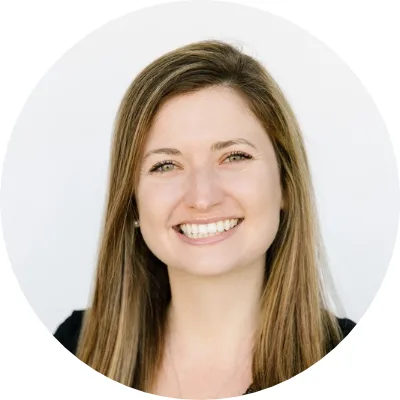
I currently serve as Vice President of Clinical Operations at CareBridge, a healthcare technology company that helps individuals receiving home and community-based services. I oversee the clinical model and quality operations for our Decision Support team, which provides occupational and physical therapy-informed recommendations to case managers to help identify the supports members need to remain safely in their homes and communities. At the most basic level, I view my responsibility as ensuring that the recommendations we make for each member’s care are person-centered, high quality, and are recommendations I would want for my own loved ones.
What key personal and/or career experiences led you to where you are today?
My career path started in high school, when I had the opportunity to participate in my school’s senior year internship program. I’m fairly sure I was most interested in the program because of the occasional half day away from class, but the experience ended up changing the trajectory of my life. I was placed with an Occupational Therapist at Children’s Healthcare of Atlanta and fell in love with the profession.
When I arrived at Wake Forest, I knew I wanted to become an occupational therapist. I also pursued a minor in Neuroscience, which deepened my understanding of how an individual’s brain impacts their function, and I studied conditions like Autism, Dementia, and Stroke which would later become my favorite populations to work with. I’m grateful for my time at Wake and for the professors who encouraged my curiosity on my path to becoming an OT.
Fast forward to 2020: I was working in a Skilled Nursing Facility during the height of Covid-19 and was feeling the uncertainty that most of us experienced during the pandemic. Out of the blue, I was contacted on LinkedIn about an opportunity to join a Nashville startup as its first frontline therapist. Taking that leap of faith turned out to be a pivotal moment in my career and in my life. Over the past several years, I’ve had the privilege of growing alongside the company, moving from Clinical Assessor to Manager, Director, and now Vice President.
Looking back, I’ve learned that some of the most meaningful opportunities come when you’re willing to step outside your comfort zone. Staying curious and saying yes to new challenges have helped me to grow both personally and professionally.
What is the most challenging aspect of your job? How do you navigate that challenge?
One of the most challenging aspects of my role is balancing rapid scaling with the need for continuous innovation. Although CareBridge was acquired in 2024 and is no longer a “startup” company, the pace and mindset haven’t changed much. For years, I kept waiting for things to slow down, but I’ve come to accept that this is part of the company and even something to appreciate.
Over time, I’ve learned that I don’t have to navigate these challenges alone. I rely on other leaders and mentors who have faced similar experiences, seek feedback from frontline team members to understand opportunities for improvement, and put myself in our members’ shoes when making decisions. Leaning on the experience of others helps me to ensure that we’re scaling well and identifying new ways to help our team and the people we serve.
What advice would you give to Wake Forest graduates about developing their personal life habits after college (finances, health, values, work/life balance)?
This is still a work in progress for me! I will say that I’ve learned over the past few years that work/life balance is key. And maybe not surprisingly, I’m a much better employee when my personal life feels balanced – when I’m sleeping well, regularly exercising, making time for hobbies that bring me joy, and spending time with family and friends.
After many 60+ hour workweeks, I’ve realized that my work suffers when I don’t take a break and refill my own cup. Figuring out what recharges me AND sharing that with others so that they can keep me accountable has helped me. Now my manager knows when it’s time to remind me I’m due for some PTO, and my own team feels comfortable having those same conversations with me. In turn, I can help keep them accountable, too.
Also… if no one has told you yet, invest in that 401k the moment you can!
We know that relationships are important for any kind of development. How do you build and maintain your network?
I was lucky (in a sense) at CareBridge, because I had 10 different managers in my first 3 years so a mentor network came with the role. More importantly, I’ve maintained those relationships and still keep in touch with all of them to this day – many have become dear friends, trusted mentors and some of the most influential people in my life.
Beyond former managers, when I identify a quality in a leader that I want to learn from, I naturally gravitate toward them. I’m drawn to people who lead well and live with integrity both inside and outside of work, and I find that they often surround themselves with others who share those values which helps my network to continually grow. I also appreciate mentorship from individuals who are very different from me, because they challenge me to think differently and sharpen my weaker skills.
Tell us about your mentoring relationships. What impact have these relationships had on your career and life?
The way that my mentors have treated me has been the perfect blueprint for how I strive to treat others. Especially in my early years at CareBridge, my mentors invested in me, gave honest feedback, and were quick to extend grace as I learned and made mistakes. Because of the way they supported me, I look for opportunities to invest in others and pay that same support forward. There is no greater joy at work than watchig someone grow into their potential.
One thing to consider, even as an almost-graduate or new graduate, is that it’s never too early to be a mentor. There will always be someone who is newer, less experienced in a particular area, or looking to develop a skill that you already have. Even if it doesn’t look like a traditional mentoring relationship, you can make a meaningful impact by encouraging others around you and being willing to help and teach as opportunities arise.
What advice would you give to current Wake Forest students and/or young alumni who are interested in working in your industry?
Find your passion and let that guide you. I believe all Wake Forest students share a drive to succeed, but when that ambition is paired with work that feels meaningful and aligned with your personal mission, the possibilities are endless!
Take time to identify what truly motivates you and then stay open-minded about where that passion might lead you. Looking back, when I first became interested in helping people participate in meaningful activities and live more independently through Occupational Therapy, I never imagined that path would eventually lead me to a role leading a team of clinicians. I’m grateful I stayed focused on my mission rather than a specific job title and stayed open to opportunities along the way.
Your career may not follow the path you expected, and that’s okay. If you find your passion and let that guide your decisions, you may end up somewhere even better than you originally planned.
What’s next for your career? What future goals or plans are you pursuing?
I’m a lifelong learner, and focused on continuing to grow as a leader, becoming better at what I do, and finding new ways to support my team. As long as I’m learning, growing, and staying connected to my mission, I’ll know I’m moving in the right direction.
Story published in July 2025. For current updates about Maria, visit her LinkedIn profile.