
Deacon Spotlight: Kiran Patel
Kiran Patel (2018, BA in Economics, Minor in Entrepreneurship & Social Enterprise)
Investor at KrisDan Management, Inc. in Miami, FL
Tell us about your current job role and employer. What are you currently working on?
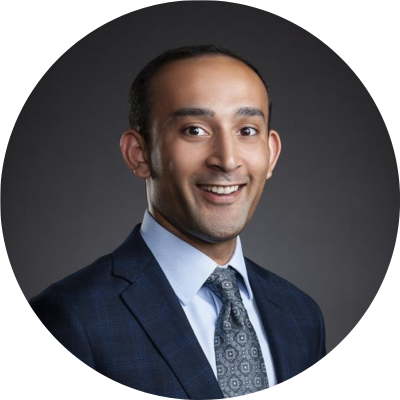
I am currently an investor at a single-family office, where I help manage an institutional portfolio. My role is very similar to a detective; I look for long-term, structural shifts in the global economy and determine how to position capital to benefit from those changes.
As a generalist, I work across both public and private markets with a wide mandate—meaning I’m ‘product agnostic’ and can look for the best opportunities regardless of where they live. Right now, I am deep into a thematic research project on the robotics sector. However, in a few days time I’ll pivot back to granular stock research given earnings season starts. It is a career that requires constant curiosity; there is truly never a dull day.
What key personal and/or career experiences led you to where you are today?
I have always preferred taking the underdog role and finding a different approach than the crowd, a mindset that has defined my career from the start. This journey began when I made the decision to change my major following the advice of a mentor I worked for during an early internship—a move that taught me the value of being adaptable. While in school, I focused on creating my own internships within the Winston-Salem community and spent my free time cold-calling professionals I admired. Many of those initial calls turned into lifelong connections I still keep in touch with today.
Even my early career trajectory was unconventional as I did not want to move to a big city such as NYC or SF; I chose to take a path that others often advised against because I believed it would help me develop a unique edge rather than a “textbook” background. That decision is exactly what allowed me to get in the seat I am in today. Ultimately, the work ethic Wake Forest instills in you is what makes the impossible possible, proving that a proactive and slightly contrarian mindset is often the best way to reach your goals.
What is the most challenging aspect of your job? How do you navigate that challenge?
The most challenging aspect of my role is time management, specifically in the context of filtering signal from noise. Because I operate as a generalist with a wide mandate, I am constantly inundated with information—whether it’s incoming investment pitches, fund manager requests, networking asks, or the 24-hour news cycle. Navigating this requires a disciplined approach to prioritization. I manage this by strictly blocking off time on my calendar for deep-work research and treating my career as a marathon, not a sprint.
What advice would you give to Wake Forest graduates about developing their personal life habits after college (finances, health, values, work/life balance)?
Wake Forest prepares you well for the logistical side of post-grad life; the rigor of the coursework naturally instills a strong sense of work-life balance and the fundamentals of financial discipline, like the importance of saving more than you spend. However, the most vital advice I can share is something I learned the hard way: don’t lose your hobbies.
Early in my career, I was so focused on defeating imposter syndrome that I let my outside interests fall away for the first four years. I’ve since realized that those personal pursuits are what prevent burnout and keep your perspective sharp. I have now made my hobbies a non-negotiable weekly priority. My advice to new graduates is to protect the things you love to do outside of the office with the same intensity you bring to your desk. Maintaining that part of your identity isn’t a distraction from your career; it’s the fuel that sustains it for the long haul.
We know that relationships are important for any kind of development. How do you build and maintain your network?
It’s pretty simple: do not be afraid to pick up the phone. In a world of automated messages, a direct call or asking a mutual connection for a warm intro still carries the most weight. You have to be proactive; most people are willing to help, but they can’t help you if they don’t know you exist. Looking back, that is something I wish I had done even more of while I was on campus.
I have also focused on building a personal brand and good reputation, which eventually creates a flywheel of high-quality inbound opportunities. I learned this when working at Wake Forests’ outsourced endowment. Your reputation is your most valuable currency. The best advice I can give is deceptively simple: follow through. If you say you are going to do something, do it. Beyond that, I approach networking with a ‘service-first’ mindset. I always make it a point to ask how I can help the other person, rather than focusing on what I can get from them.
Story published in April 2026. For current updates about Kiran, visit his LinkedIn profile.