
Deacon Spotlight: Claiborne Linvill
Claiborne Linvill (2002, BA in Communication)
Representative, Pickens County Council; Candidate, SC State House; Freelance Marketing Strategist/Writer in Clemson, SC
Tell us about your current job role and employer. What are you currently working on?
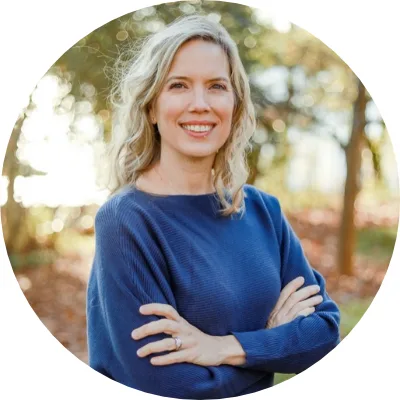
I hold two part-time jobs: I am a freelance marketing strategist and business writer/editor. My main projects right now are editing a magazine for a major university athletic program, and helping launch a public mental health campaign in a nearby city. Next, I am in my fourth year of a four-year term on Pickens County Council, representing District 1. On council, we are currently working on many land use rules, specifically concerning solar farms, lake areas, and housing density. Finally, I am currently running as a candidate for SC State House, District 3. I’ll be on the November 3rd ballot. I’m managing my own campaign with a small team, so my days include social media work, talking to voters, and attending events.
What key personal and/or career experiences led you to where you are today?
I took a job right after college in an industry I had never known about — a lecture agency. This turned out to be a perfect fit for my interests in communication, theater and current events. I had wanted a marketing job, but ended up in Sales. However, that position helped me learn everything about the company. I later moved to the Marketing department and found that I loved the writing and editing side of projects the most. My next job was in nonprofit public relations and marketing, which was fulfilling but exhausting, as nonprofit employees normally have to wear a lot of hats. After I had my first child, I got a master’s degree in Professional Communication (the business version of an English degree), which gave me credibility as a writer, and I started working as a freelance proofreader, editor and business writer. Because my job was flexible and my family was involved in many community and school programs, I also started volunteering a lot. My work with the community inspired me to run for local office, and having a background in marketing and experience in social media strategy helped me run a campaign effectively.
What is the most challenging aspect of your job? How do you navigate that challenge?
Because I have two part-time jobs and am also campaigning — not to mention being a mother of two teenagers — time management is by far my biggest challenge. I use project management software, Google Calendar and Google Tasks to organize my life, as well as dry erase boards and scattered to-do lists. I bill hours from all sorts of different places (I’m grateful for my wifi hotspot!), make phone calls while walking the dog, and try to only work with clients who understand that my work hours aren’t 9-5. While this work flexibility is necessary and helpful, it also means I have to be careful about not letting work creep into all parts of my life (this was working better for me before the campaign).
What advice would you give to Wake Forest graduates about developing their personal life habits after college (finances, health, values, work/life balance)?
Many people think that self-care means saying “no” to activities and spending time home alone. And while that can be helpful, it’s usually way more energizing and rewarding to volunteer with others as part of your work-life balance. When you give back to your community, you meet people, you connect with where you are, and you can try out different skills and potential future jobs. You make connections that matter and you feel more rooted in where you live.
We know that relationships are important for any kind of development. How do you build and maintain your network?
First, you can only win an elected office if you have connected with people in your community — and not necessarily through politics. Volunteer at all levels, join the school PTA, coach the kids’ sports teams, serve the meals, get your hands dirty. The people you volunteer with in your community — the ones who see how much you care — will become your biggest supporters when you run for office.
Also, I keep in touch with a lot of people over social media, which is admittedly exhausting but also helpful. Once while on the playground with my children, another mom walked up to me and said “we have a lot of the same friends from Dallas and Wake Forest” (which was quite the surprise in small-town South Carolina!). We got to talking, and she went on to offer me a job with her web-design company, where I have now freelanced for more than 10 years. You never know when your Wake Forest connections will come in handy, so stay in touch with people!
Tell us about your mentoring relationships. What impact have these relationships had on your career and life?
I worked for the same company in Washington, DC, for five years after graduation. I became a mentee to my boss in the Sales department and later my boss in Marketing, both of whom took me under their wings to teach me their careers. Even though I quit the job after some problems I had with the company, I stayed in contact with those ex-bosses as friends. Years later, when I started my freelance company, both my ex-bosses hired me for major projects. I owe the success of my freelance career to these former mentors. You never know which relationships and colleagues may impact your life in the future, so stay in touch and don’t burn bridges on your way out of any company.
What advice would you give to current Wake Forest students and/or young alumni who are interested in working in your industry?
Be able to pivot. Keep money in savings, stay curious, learn new things, be willing to let go of the plan. I realized after having kids that I didn’t want to work full time, so I pivoted to proofreading work because it was the easiest first step to freelance editing and writing. Going into politics was another pivot I never expected to do, but I’m finding it very fulfilling.
To be frank, I don’t know what the future will be for marketing strategy and business writing. Much of my work is being taken over by AI. Just a few years ago, I was paid to write blogs for companies; now blogs on websites are rare. Most online content is now developed by AI, for AI. I suspect I won’t be in this industry much longer, but I’m glad I have other paths and interests to pursue.
As for politics — we’ll always need politicians! I recommend getting involved in your community and taking the local Leadership course (these are classes offered by your city or county to learn how they run). Attend local city council, county council or school board meetings to see how they work and what issues are at stake. We need lots more candidates for local offices, so this is a great place to start in politics — and a place where you will make a big difference. You’re never too young to run, and there’s no one degree, life experience or plan that makes a good politician; we can all serve.
What’s next for your career? What future goals or plans are you pursuing?
I hope to be elected to the South Carolina State House in November, which would involve serving in Columbia, SC, 3 days/week. Should that happen, I’ll have to scale back my freelance career. If I don’t win office, I may finally write the novel I started years ago and never finished…
Story published in September 2026. For current updates about Claiborne, visit her LinkedIn profile.