
Deacon Spotlight: Catherine Burroughs
Catherine Burroughs (1980, BA in Theater and English)
Courtesy Professor of Performing Arts and Media Studies at Cornell University
Tell us about your current job role and employer. What are you currently working on?
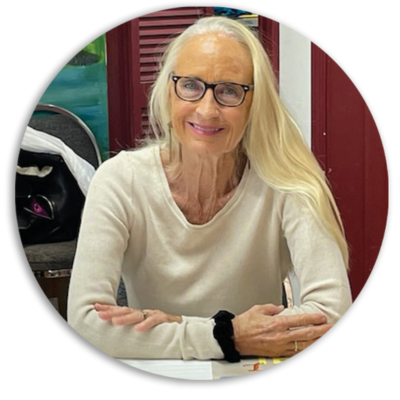
As Courtesy Professor of Performing Arts and Media Studies at Cornell University, I have access to all of the resources at that institution for my academic research, and I can list my title with any publishers, editors, as well as conferences where I go to give papers and public presentations.
I am also a novelist (see “Ibo’s Landing. A Novel”). In 2026, I will be writing my next work of fiction.
What key personal and/or career experiences led you to where you are today?
I was fortunate to attend Salem Academy in Winston-Salem, NC between 9th-12th grades. There, I had a rich education in literature, history, and performance in theatre, dance, and music. I was in Salem Academy’s Glee Club for four years, and I was the lead in the Glee Club’s production of the musical, “The Boy Friend” in my senior year.
This education prepared me well for Wake Forest, graduate school, teaching at the college and graduate levels, and for the professional acting career I would have in my 20s. (I am a current member of Actors’ Equity Association.)
At Wake Forest, I was fortunate to have excellent professors who had PhDs from prestigious institutions and who were committed to teaching and shaping the Wake Forest community after the college moved from Old Wake Forest to Winston-Salem in 1956.
My father—Julian Carr Burroughs, Jr.—was Professor of Radio, TV, and Film at Wake Forest, and so I grew up on Faculty Drive right across from the campus.
When I actually enrolled at Wake Forest and became a Theatre/English major (1976-1980), I loved the classes taught by professors such as Ed Wilson, Harold Tedford, Don Wolfe, Elizabeth Phillips, Nancy Cotten, Dr. Smiley, and Dr. Zuber, etc. These courses prepared me for my future careers in teaching at the college level and acting professionally. I also took all of Dr. Wilson’s courses in Romanticism and Poetry and later modeled my style of teaching on his.
After Wake Forest, I did an MA in English at Connecticut College (degree 1983), a PhD in British Romantic Drama (degree 1988), and two Post Docs—one at UCLA (1989) and another at Cornell University (1997). These Post Docs were supported with awards from the National Endowment for Humanities (NEH).
It was at UCLA that I met my mentor, who encouraged me to write a book on a Scottish playwright—Joanna Baillie—who was called “the female Shakespeare” of the British Romantic era. This book, “Closet Stages,” earned me an international reputation in my field and fueled the rest of my writing and research career.
I have since published 6-7 academic books, including the award-winning “The Routledge Anthology of Women’s Theatre Theory and Dramatic Criticism” (Co-ed. J. Ellen Gainor).
What is the most challenging aspect of your job? How do you navigate that challenge?
I taught college for 30 years, and the most challenging aspect of my job was showing undergraduates how to develop a thesis rather than just an observation about poetry, drama, or prose. It was also difficult, at first, to demonstrate to students how to read critically and analytically.
To solve these challenges, I used my training in Acting to read literature aloud for the purpose of exciting my students about the information that arises when we discover a text’s different rhythms, sound, and form.
When it came to the students’ writing of their papers, I taught them how to create their original theses in STAGES through in-class workshops focused on their making observations, raising critical questions, and developing theses that required secondary research. The result in a number of cases was that some students produced papers good enough to be accepted and presented at national conferences.
We know that relationships are important for any kind of development. How do you build and maintain your network?
I have always been a loyal friend and family member, and I make time in my day to connect to people I care for and value—by email, text, and phone. I arrange lunches to get together with friends; send cards; follow an impulse to check-in with others.
Tell us about your mentoring relationships. What impact have these relationships had on your career and life?
Because I have been a professor at the undergraduate and graduate levels for 30 years, mentoring has been my job and my calling. Whether at Cornell College in Iowa, the University of Iowa, Wells College in central New York, or Cornell University, I have loved working with young people and helping them to dream, confront their concerns, and learn to how to laugh freely.
These mentoring relationships have nourished me through the years, and I have been touched that I still hear from former students via cards, Facebook, and phone calls. I Zoom with two of my students once a month, and we share our lives.
Many of the seeds planted in my classrooms over the past 30 years have bloomed into beautiful, strong, and liberal-minded people.
Story published in December 2025. For current updates about Catherine, visit her website.