
Deacon Spotlight: Avery Warfield
Avery Warfield (2022, BA in Politics & International Affairs, Minors in Philosophy & Sociology)
Space Imagery Analyst at HEO in Washington, D.C.
Tell us about your current job role and employer. What are you currently working on?
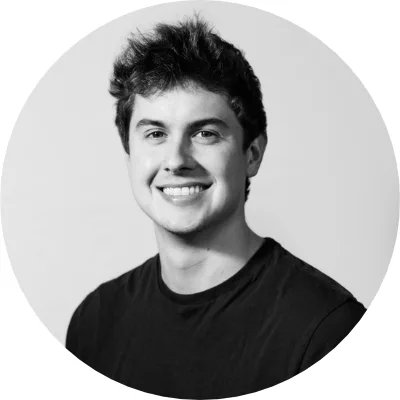
I am an analyst at HEO Space. HEO takes images of satellites and space objects from space (called non-Earth imaging) to monitor orbital assets and provide strategic intelligence to government, defense, and commercial customers. We track high-interest targets and create actionable insights by monitoring satellite activity, profiling unknown objects, and identifying anomalies to support space domain awareness. Recently, I have been analyzing how the provisions of the 1967 Outer Space Treaty apply to modern anti-satellite capabilities.
What key personal and/or career experiences led you to where you are today?
I grew up living in the U.S., Africa, and Europe, due to my parents’ work. From a young age, this gave me a strong global perspective, which I believe is one of the strongest personal assets I hold today. It allowed me to deeply understand different parts of the world and hold a unique worldview. My upbringing also made me want to work in an international setting, which was valuable for going into the intelligence field.
Prior to working in the space sector, I spent nearly three years in Dakar, Senegal, as an intelligence analyst, specializing in geopolitical risk, counterterrorism, governance, and armed conflict across Sub-Saharan Africa. I have also worked as a drone and UAV warfare analyst, assessing open-source intelligence on how emerging technologies alter the balance of power, tactical decision-making, and asymmetric modern warfare.
What is the most challenging aspect of your job? How do you navigate that challenge?
The most challenging aspect is navigating an increasingly crowded space environment to accurately identify and analyze high-priority targets. The goal is to convert complex orbital data into clear, actionable intelligence, ensuring stakeholders receive precise insights they need to make decisions.
What advice would you give to Wake Forest graduates about developing their personal life habits after college (finances, health, values, work/life balance)?
In your twenties, I think one of the most transformative habits you can build is expanding your global perspective. Go to a new country and immerse yourself in the culture, language, food, and customs. That quote that goes “money comes back, time doesn’t” is just so true. I’ve never once regretted a trip I took, or money spent seeing more of the world. Experiencing life beyond your immediate bubble completely rewires how you navigate challenges, makes you more adaptable, and gives you a worldview that will serve you personally and professionally throughout all the changes in life.
For me, the transition from college to adult life was much bigger than the one from high school to college, so, above all, trusting God kept me grounded through all the changes that have happened and will happen.
Other than that, your job and work is very important, but prioritizing your health and fitness is just as valuable, so don’t forget to be healthy and good to your body with all of the other things going on in life.
We know that relationships are important for any kind of development. How do you build and maintain your network?
When you live and work abroad (or move a lot), keeping your network intact across different countries and continents is definitely a tough challenge. My network is spread across the world, so I’ve learned that lasting relationships don’t necessarily require constant communication, but need quality and intentionality. I’d say distance naturally filters your connections, but the ones that remain become incredible lifelong anchors both personally and professionally. One of the best parts of a global network is landing in almost any city in the world, knowing someone who lives there from a past part of your life, and reconnecting like no time has passed. It makes the world feel smaller.
One goal I had for this past year was to visit every one of my friends’ hometowns from my Master’s program. I haven’t been able to go to all of them yet, but I was able to go to Berlin, Munich, Belgrade, and Sydney and see where they grew up. It was fun to add a few new places to my list, and experience the country from their point of view.
Tell us about your mentoring relationships. What impact have these relationships had on your career and life?
As someone still in the early stages of my career, mentors throughout my professional life have been essential. Taking the time to gain perspective from experienced mentors, such as hearing firsthand how they handle career challenges, decisions, and personal growth, has been an indispensable asset, and I would encourage anyone at Wake to take advantage of this. I can think of many mentors and bosses who have had such a significant impact on my career growth and personal life.
What advice would you give to current Wake Forest students and/or young alumni who are interested in working in your industry?
For many, when you think of Wake Forest, you think of their business, law, or medical programs (which are elite, of course). But if you’re looking to break into national security or intelligence, there isn’t necessarily an obvious route, and you have to be intentional about building your own path.
My advice would be to find a niche that you are very interested in and become as smart as you can in that subject. For me, early in my career and throughout my master’s, that was drone warfare. The longer you know and study a certain area, the better you will become at analyzing what is going on and providing actionable insights to decision-makers.
I always thought if I was to teach an Introduction to Intelligence class at Wake Forest, I would have students pick a single country or topic to track all semester. Writing regular intelligence reports on that subject over time forces you to move past surface-level knowledge and build real subject-matter expertise.
Story published in August 2026. For current updates about Avery, visit his LinkedIn profile.