
Deacon Spotlight: Ally Andren
Ally Andren (2016, BA in Chemistry, Minors in Spanish & Psychology)
Surgical PA at Plastic Reconstructive & Microsurgical Associates (PRMA) in San Antonio, TX
Tell us about your current job role and employer. What are you currently working on?
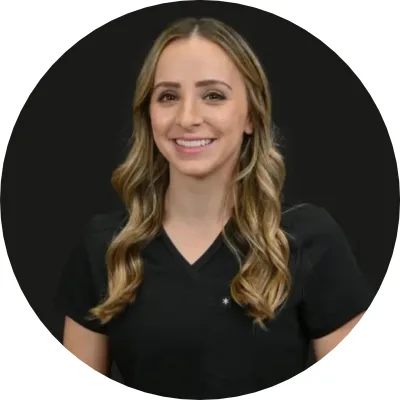
I am a surgical PA at a nationally renowned plastic and reconstructive surgery practice which specializes in advanced breast reconstruction for breast cancer patients. I work in the operating room assisting patient mastectomies and breast reconstruction using a specialized microvascular procedure involving a patient’s own natural tissue. The work is rewarding and each case is an opportunity to be inspired by the incredible strength and resilience of my patients. I work closely with a talented group of professionals including surgeons, PAs, and other medical staff to facilitate fundamental portions of the procedure such as microvascular work, free flap dissection, and closure of surgical sites.
What key personal and/or career experiences led you to where you are today?
I always knew I wanted to pursue a career in medicine, yet my journey was far from linear. Prior to becoming a PA, I worked in clinical research at Boston Children’s Hospital, as a Medical Assistant at an Internal Medicine practice, volunteered weekly at Boston Healthcare for the Homeless, and went on a medical mission trip to Honduras, all while working customer-facing jobs as a cater waiter, barista, and even as a certified yoga instructor. I think everyone at some point in their life should work in the service industry or, at the very least, find ways to diversify their work experience. Those early years cemented the importance of professionalism, work ethic, and adaptability and instilled crucial lessons that have made me a better provider, teammate, and communicator.
What is the most challenging aspect of your job? How do you navigate that challenge?
Surgery can be stressful and perfection is the expectation in the plastic and reconstructive sphere. You must have a strong understanding of each patient’s medical history and anatomy to inform your surgical approach and ensure the best possible outcome. One of the challenges in my role is that I work with 13 surgeons who have differing techniques, instrument choices, and working styles. A strong surgical PA needs to be adaptable and able to anticipate the needs of both the patient and surgeon. That means understanding each surgeon’s preferences, recognizing team dynamics and the strengths of different team members, and communicating proactively to keep the procedure running seamlessly and efficiently. As you can imagine, this can be challenging and takes time and repetition. Set your ego aside, remain an astute observer, ask thoughtful questions, be transparent about your strengths and limitations, and stay persistent. Most of all, keep your shared goal at the forefront: to restore a patient’s health and improve their quality of life.
What advice would you give to Wake Forest graduates about developing their personal life habits after college (finances, health, values, work/life balance)?
In any demanding job, it can be easy to take your work home with you. Early on in my PA career, I struggled with work-life balance and found my identity and self-worth were defined by my work. It took a job change and reframing of my priorities to realize that, while work is important and meaningful, I needed to invest more in myself. I had to ask, “what makes me happy outside of work?” I began to be more intentional with my personal time by focusing on my relationships with friends and family and exploring new hobbies. Nurturing the creative side of myself made me feel more invigorated and fulfilled which, ironically, allowed me the space to show up more meaningfully for my patients.
We know that relationships are important for any kind of development. How do you build and maintain your network?
My career path and personal life have led me to live in 3 different states in a ten year span. At first, it can be daunting to be in an unfamiliar place with minimal contacts but fostering relationships and establishing networks are important to your personal and professional development. Two years after graduation, I went out on a limb and messaged a non-profit to see if I could join their medical mission as a Spanish translator in the cardiac catheterization lab. At the time, I had experience shadowing in the cath lab and had completed a Medical Translation course to learn how to better converse with Spanish-speaking patients. The organization agreed to sponsor my attendance and the mission trip became one of the most formative experiences of my career thus far. Put yourself out there, say yes to new experiences, be genuinely curious about the people and things around you, and work to make meaningful connections with others. Oh and as my friend’s mom liked to remind us, “it’s a small world. Behave!”
Tell us about your mentoring relationships. What impact have these relationships had on your career and life?
I have been incredibly lucky to have wonderful mentors who provided me with the wisdom, perspective, and confidence to believe in myself and pursue my dreams. While my mentors were fundamental in creating a stable foundation, the individuals who made the most meaningful impact were my sponsors–professors and colleagues who actively advocated on my behalf to help create career opportunities. Many of these individuals wrote letters of recommendation for graduate school or provided me with job contacts when the military moved my husband and I across the country. Experiencing the impact of sponsorship has compelled me to play more of an active role and prioritize facilitating career advancement for those I mentor.
What advice would you give to current Wake Forest students and/or young alumni who are interested in working in your industry?
Be open to exploring the non-linear path and take advantage of your liberal arts education. While at Wake, I thought there was one recipe for a career in medicine: take pre-med coursework, get a degree in science, and ace your entrance exam. Having worked on a PA admissions panel, I found that many schools embrace (and even favor) the alternative applicants. I had a friend who majored in Religion, worked as an investment banker on Wall Street, and then opted for a career change and proceeded to receive interviews at nearly every medical school he applied to. Another of my classmates was a physics teacher for 30 years before becoming a PA. As someone who benefited from a non-linear path to medicine, I would encourage more people to consider it. You can discover so much from diverse work experiences and learning how to survive in the world as a young professional. There are a million different avenues out there–find the one that enriches your life and it will make you a better clinician and a better human. Work hard and study what you love, the rest will figure itself out.
What’s next for your career? What future goals or plans are you pursuing?
I hope to continue to establish myself as a well-trained, competent, and proficient surgery PA who is well-respected and trusted by my peers. The operating room is a demanding and exhilarating environment and I relish the teamwork and collaboration that takes place. I feel very fortunate to be part of a great surgical team and hope to continue working in the microvascular or cardiac fields. In addition to my clinical practice, I especially enjoyed teaching as adjunct PA faculty member and would love to take on a larger role in PA education.
Story published in September 2026. For current updates about Ally, visit her LinkedIn profile.