
How Not to Use AI in a Job Search
By Allison McWilliams PhD (’95), Assistant Vice President, Mentoring and Alumni Personal & Career Development, Wake Forest University
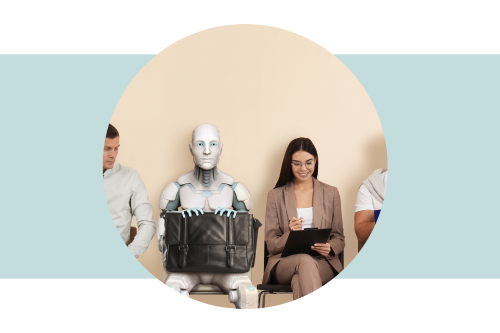
We are inundated with content about the use of AI these days (much of it AI-created, itself). No matter how you feel about it, we all need to obtain at least a baseline level of AI fluency in order to be successful in today’s work world. While the jury’s still out on whether AI is coming to take everyone’s jobs, there’s no question it is changing how work is performed, and the successful candidate will be able to demonstrate at least an understanding of these shifts, and a willingness and ability to adapt to them as they happen.
If you’re in job search mode, you might be exploring AI tools to make yourself a more successful applicant. There are many ways AI can be helpful to you as an applicant, from assessing your ability to get past the Applicant Tracking Systems (ATS) to interview prep. But the smart applicant knows there are many ways you should not be using AI; indeed, these tools can prevent you from succeeding. Here are a few ways you should not be using AI in a job search.
Resume and Cover Letter Writing. A great application of AI is to use it to compare your resume to a job description to assess your gaps. But ask any recruiter and they will tell you they can tell the documents that are fully AI-drafted versus those that aren’t, and many are putting safeguards into their ATS to kick these applications out. These are your personal marketing documents. They need to reflect your experience and your style, and ultimately, if you get selected for an interview, you will be asked to defend them. Use the tool for feedback. But be sure the drafting is yours.
Interviewing. AI tools can provide great interview prep by asking questions based on a job description and giving feedback on your responses. AI should not be used during an actual interview to feed you answers in real time. Recruiters have noted they can see what you are doing and will automatically reject you from the pool of applicants. (Note: If there is a disability reason for doing this, then you will have to consider whether or not to disclose this to the person conducting the interview.)
Networking. Much like the points above, while you might use AI to do your initial research for networking contacts, don’t use it to do your outreach or to conduct the conversation. Network-building is relationship-building, and no one wants to feel like they are talking to a bot. Draft a brief, sincere email (or LinkedIn message) expressing your interest and requesting a time to meet, then show up prepared to engage with the person as a human being. Your full authentic self will bring you more success than any AI agent ever can.
Applying. This one might sound counterintuitive, but the reality is that with the advent of AI application bots, recruiters are now flooded with more applications than they can handle. What used to garner 100 applications now results in thousands, many of which look exactly the same (again, due to AI-generated documents). One way you can stand out from the crowd is to skip that “easy apply” button and instead go to the organization website, apply through their program, and then try to find a networking contact or the hiring manager to email as a follow up.
AI tools can be helpful in a job search for research, evaluating your resume against a job description, and interview practice. You need to understand the tools as jobs and industries change, and be able to articulate your ability and comfort with using them in an interview. But when it comes to marketing your experience, making connections, interviewing, and applying, remember: it’s you, the human, they want on their teams. You will make yourself more attractive when you show up as your full human self. If not, then they might as well just hire a bot to do the job for you.